
How to Choose the Best Travel Backpack for Budget and Long Trips in 2026
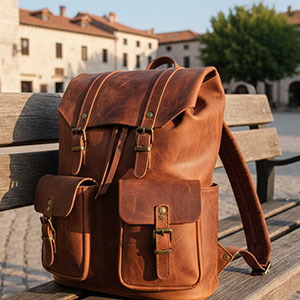
International travel patterns in 2026 are shifting toward longer, lighter, and more flexible mobility. Budget travelers, digital workers, and small tour operators are all prioritizing luggage systems that reduce carry cost while improving durability and storage efficiency. In this context, the travel backpack has become a core logistics product rather than a simple consumer item. At Camytonc, we support global buyers with structured backpack manufacturing and customization solutions designed for both retail and commercial deployment through our custom backpack capabilities.
What Defines a Travel Backpack for Budget and Long Trips in 2026?
A modern travel backpack is defined by its balance between cost efficiency, structural durability, and ergonomic stability. For budget travelers and long-trip users, the backpack must support multi-environment usage, including airports, urban transport, and outdoor movement without frequent replacement.
From a B2B product perspective, the core definition is no longer based on appearance but on measurable performance indicators:
- Load-bearing stability under 8–12 kg continuous weight
- Material resistance to abrasion and moisture exposure
- Airline carry-on compliance (commonly 40–45L capacity range)
- Internal compartment efficiency for compression packing
To support procurement decisions, we standardize functional evaluation into a clear specification framework:
| Functional Area | Minimum Requirement | Commercial Impact |
| Capacity Range | 20L–45L | Determines travel segment targeting |
| Fabric Density | 600D–1200D polyester / nylon | Affects lifecycle cost |
| Zipper System | Reinforced YKK or equivalent | Reduces return rate |
| Shoulder Structure | Ergonomic load distribution | Improves user retention |
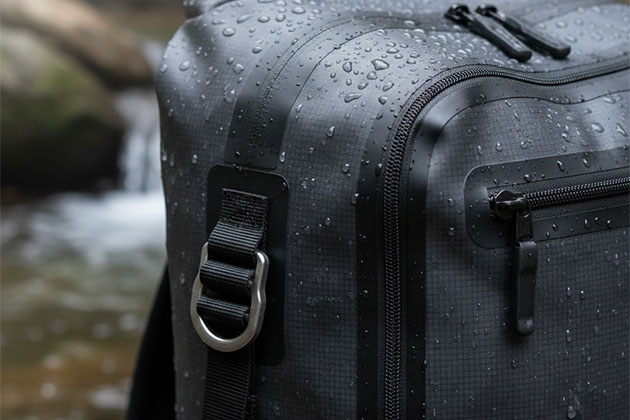
| Water Resistance | PU coating or laminated layer | Expands outdoor usability |
These indicators are essential for distributors and retail buyers who manage return rates and long-term product positioning. In Camytonc production systems, these specifications are controlled during sampling and pre-production validation to reduce downstream risk.
Why Budget Travel Backpacks Are Becoming a High-Volume Market Segment?
Budget travel backpacks are no longer positioned as entry-level products. They now serve as the dominant volume driver in global e-commerce and retail distribution due to rising short-trip travel behavior and airline baggage cost optimization.
Three structural market forces are shaping demand:
First, airline baggage fee sensitivity is pushing travelers toward carry-on compliant backpacks. This reduces dependency on checked luggage and increases demand for 40L compact systems.
Second, cross-border e-commerce sellers require fast-moving inventory with stable manufacturing cycles. Budget backpacks allow higher SKU rotation without excessive capital lock-in.
Third, promotional and branding demand is expanding. Many organizations now use backpacks as functional marketing assets, requiring scalable customization.
From a manufacturing standpoint, cost control is achieved through material standardization and modular design. However, reducing cost cannot compromise stitching density, load distribution, or zipper durability, as these directly influence product return rates.

How Long-Trip Travel Requirements Change Backpack Design Logic?
Long-trip usage introduces a different set of engineering requirements compared to short travel or urban commuting. The backpack must support continuous use across multiple environments without deformation or comfort degradation.
The most critical design factors include load balance, ventilation, and compartment segmentation. In long-distance travel, uneven weight distribution often leads to shoulder strain and material fatigue. Therefore, internal frame support becomes essential even in soft-shell backpacks.
We structure long-trip backpacks using the following design logic:
- Multi-zone storage system to separate clothing, electronics, and accessories
- Compression system to stabilize internal load movement
- Reinforced back panel with airflow channels to reduce heat accumulation
- Hidden structural reinforcement for long-term shape retention
Performance differences between standard and long-trip optimized backpacks can be summarized as follows:
| Feature Category | Standard Backpack | Long-Trip Backpack |
| Internal Structure | Basic compartments | Multi-zone + compression system |
| Back Support | Foam padding only | Reinforced airflow back panel |
| Durability Cycle | 6–12 months retail use | 12–24 months heavy use |
| Load Stability | Medium | High (anti-shift design) |
For B2B buyers, these differences directly affect warranty cost, brand reputation, and post-sale service burden. A poorly structured long-trip backpack increases return probability significantly after 3–6 months of continuous use.
What Materials and Production Standards Reduce Procurement Risk?
Material selection is the most important risk control factor in backpack sourcing. In global procurement, inconsistent fabric density and unstable stitching quality are the primary causes of product failure.
We apply standardized material classification across production lines:
- Polyester 600D: suitable for budget travel backpacks with a short lifecycle targeting
- Polyester 900D: balanced performance for mid-range retail products
- Nylon 1000D–1200D: high durability for long-trip and outdoor applications
- PU laminated fabric: enhanced water resistance for variable climates
To support procurement transparency, we align material performance with measurable outcomes:
| Material Type | Abrasion Resistance | Water Resistance | Target Market |
| 600D Polyester | Medium | Basic coating | Entry retail |
| 900D Polyester | High | Moderate | Mass market |
| 1000D Nylon | Very High | High | Premium travel |
| PU Laminated | High | Very High | Outdoor / travel brands |
Production consistency is controlled through sampling validation, tensile testing, and stitching density inspection. These steps reduce batch variation and help B2B buyers maintain stable product quality across multiple shipments.
How Customization Improves Brand Value and Distribution Efficiency?
Customization is now a structural requirement in global backpack distribution rather than a branding add-on. Retailers, promotional companies, and e-commerce sellers increasingly require logo integration, color segmentation, and packaging consistency.
In our manufacturing system at Camytonc, customization is implemented through controlled production stages to ensure that structural integrity is not affected by surface-level branding changes. This includes embroidery positioning, heat-transfer durability testing, and logo alignment validation.
Typical customization parameters include:
- Logo placement (front panel, strap, or side panel)
- Colorway segmentation for retail differentiation
- Internal label branding for private distribution channels
- Packaging design aligned with retail shelf requirements
For buyers managing multiple markets, customization improves SKU flexibility and reduces inventory redundancy.
Direct inquiry and specification upload are supported through our platform.
What Should Buyers Evaluate Before Selecting a Supplier?
Supplier selection for travel backpacks requires a structured risk assessment approach rather than price comparison alone. The most common procurement issues arise from unstable production quality, unclear sampling standards, and inconsistent delivery timelines.
Key evaluation criteria include:
- Production capacity stability across peak seasons
- Material sourcing transparency and certification control
- Sample approval cycle and revision speed
- Quality inspection system before shipment
- After-sales response for batch issues
These factors directly influence supply chain reliability and downstream retail performance.
For long-term procurement planning, buyers should prioritize suppliers with repeatable production systems rather than one-time cost advantages. This reduces operational volatility and improves brand consistency in competitive markets.
FAQ
How can I request a quotation for custom travel backpacks?
Quotation requests can be submitted through technical specifications, design files, or sample references. Buyers can upload requirements directly via structured evaluation and pricing feedback.
What is the typical MOQ for wholesale backpack orders?
MOQ varies by material and customization complexity. Standard production lines support scalable batch ordering for distributors and retail chains, with flexible volume planning based on product configuration.
How do you ensure product quality consistency across batches?
Quality consistency is maintained through standardized material sourcing, pre-production sampling, in-line inspection, and final shipment verification to reduce batch deviation risks.
Can backpacks be customized for different retail markets?
Customization can be applied across logo placement, color schemes, and packaging design to align with regional retail preferences and distribution strategies.
What support is available after bulk delivery?
Post-delivery support includes defect review, replacement coordination, and production feedback integration to improve future batch stability and reduce operational risk.
At Camytonc, we continue to support global B2B buyers with structured backpack manufacturing systems designed for scalability, cost control, and long-term supply reliability.