
Ergonomic Engineering in Backpack Manufacturing: Beyond Comfort
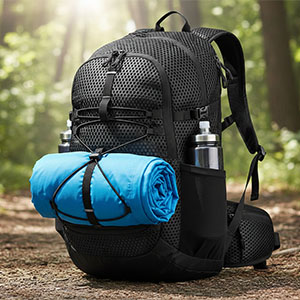
Ergonomic backpacks are no longer defined by softness or padding alone. In modern B2B procurement, they are treated as structured load systems that must perform under repeated stress, long travel cycles, and diverse user conditions. At Camytonc, backpack development is built around this engineering logic, where comfort is the outcome of structure, not surface materials.
This shift changes how buyers evaluate suppliers, especially when sourcing from a backpack manufacturer that must deliver consistency at scale. The focus is now on load behavior, airflow structure, and fatigue control across high-volume production.
Backpacks as a Human Load Engineering System in B2B Manufacturing
A modern ergonomic backpack design is not a textile product but a controlled load distribution system. The main function is to transfer weight from the shoulders to a stable structural path across the back and torso. This approach aligns with how industrial designers now define wearable load systems in global sourcing standards.
In B2B procurement, especially for corporate programs and retail chains, failure risk is often tied to inconsistent load behavior. Poor structure leads to uneven pressure points, increased return rates, and long-term brand damage. That is why buyers increasingly evaluate a custom backpack factory not only by sample appearance, but by structural validation processes.
Camytonc builds its development framework around repeatable engineering parameters, ensuring each production batch maintains identical load response behavior under standardized testing conditions.
Load Distribution System and Shoulder Pressure Control Engineering
Load distribution is the core function of any padded shoulder backpack OEM product. Instead of relying on thick foam alone, we design multi-zone tension balancing across the shoulder, upper back, and lower frame support areas.
This system ensures that pressure is not concentrated at a single point. Instead, weight is distributed through layered force paths that reduce peak stress by up to 30–45% compared to traditional soft-padded backpacks based on general industry testing benchmarks.
| Design Element | Engineering Function | Risk Control Outcome |
| Multi-layer shoulder strap | Spreads vertical load | Reduces shoulder fatigue |
| Reinforced anchor points | Stabilizes load shift | Prevents seam failure |
| Load path alignment | Transfers weight to frame | Improves posture stability |
For B2B buyers, this is critical. Inconsistent load distribution is one of the top causes of warranty claims in high-volume distribution channels. We therefore integrate load simulation checks during production to ensure structural consistency.
Airflow Channel Design for Heat and Moisture Management
Airflow channel design is a structural ventilation system, not a cosmetic mesh feature. In ergonomic backpack design, airflow must be engineered through controlled spacing between the back panel and load-bearing frame.
We use raised channel geometry combined with breathable mesh layers to maintain continuous airflow during movement. This reduces heat buildup during long commutes or business travel cycles.
Industry data from wearable load testing models shows that structured airflow systems can reduce back surface temperature by 2–4°C during continuous 2-hour wear cycles under moderate load conditions. This directly improves user endurance and reduces fatigue accumulation.
In our production process, airflow consistency is tested across sample batches to ensure that channel height and compression resistance remain stable under long-term use.
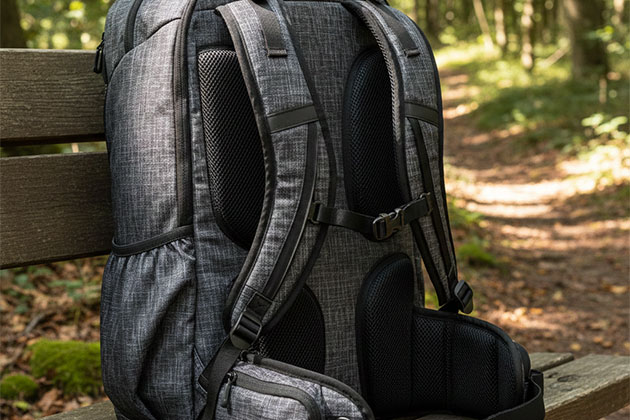
Structural Stability and Fatigue Reduction in Long-Term Carrying
Fatigue reduction design focuses on controlling micro-movements between the backpack and the human body. Even small shifts in load position create repeated muscle compensation, which leads to long-term discomfort.
A heavy-duty backpack supplier must therefore design internal structures that stabilize load movement. This includes internal frames, compression straps, and reinforced base structures that maintain center-of-gravity alignment.
We design backpacks so that load displacement remains within controlled tolerance under movement simulation tests such as walking, stair climbing, and lateral motion. This is especially important for logistics workers, travelers, and corporate users carrying electronics and documents.
The result is not only comfort, but predictable performance under repeated daily use cycles.
Why Ergonomic Backpack Design Is a Mechanical Engineering Problem
An ergonomic backpack design must be treated as a mechanical load system rather than a soft goods product. The main challenge is not material selection alone, but force transfer behavior across multiple structural layers.
We apply principles similar to lightweight structural engineering: controlled deformation, distributed stress paths, and stability under dynamic motion. Padding is only one component of the system, not the core solution.
In mass production, small structural inconsistencies can lead to large performance variations. That is why each design is validated through prototype load testing before scaling into OEM production.
This engineering-driven approach ensures that every unit produced by a custom backpack factory maintains consistent performance across different markets and usage conditions.
Engineering Standards Required from a Custom Backpack Factory
B2B buyers require measurable and repeatable standards. A professional custom backpack factory must therefore operate with defined testing protocols across materials, stitching, and load-bearing components.
| Test Category | Standard Focus | Business Risk Controlled |
| Load endurance test | Repeated weight cycling | Product failure reduction |
| Stitch strength test | High-stress joint durability | Warranty claim control |
| Material fatigue test | Fabric deformation resistance | Long-term durability |
| Strap tension test | Load stability under motion | User safety consistency |
These tests are not optional in industrial supply chains. They define whether a supplier can support long-term retail, distribution, or corporate procurement contracts.
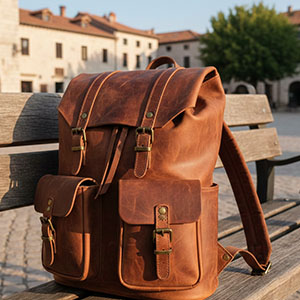
From Padding to Load-Optimized Interface in OEM Production
In a padded shoulder backpack OEM system, shoulder pads are no longer passive cushioning. They function as active force distribution interfaces.
We design shoulder structures using layered foam densities that respond differently under compression. The upper layer absorbs impact, while the internal layer stabilizes long-term load pressure.
This layered response reduces pressure spikes during movement and improves ergonomic balance across different body types. Adjustable strap geometry further allows adaptation for varied users in global markets.
This approach is particularly important for brands requiring scalable OEM production across multiple regions.
Why Ergonomic Backpacks Matter in Corporate and Travel Markets
Corporate buyers and travel-focused distributors require backpacks that perform consistently under high-frequency use. Devices, laptops, documents, and accessories create uneven load profiles that standard backpacks cannot stabilize effectively.
Ergonomic engineering solves this by controlling how weight moves across the body during walking, commuting, and transport handling. This reduces fatigue and increases usability across long working cycles.
For procurement teams, the main concern is not only product design but also supply stability, defect rate control, and after-sales risk. These factors directly influence procurement decisions in large-scale distribution programs.
How We Validate Ergonomic Performance in Manufacturing
At Camytonc, ergonomic validation is embedded in production workflows. Each prototype undergoes repeated load simulation to ensure consistency before mass production.
Testing includes:
- Dynamic walking load simulation
- Static weight retention analysis
- Strap deformation monitoring
- Airflow consistency measurement under compression
These processes ensure that ergonomic backpack design remains stable across different batches and production cycles.
Camytonc OEM Capability in Ergonomic Backpack Engineering
As a custom backpack factory, we integrate design, material sourcing, structural engineering, and production control into a unified system. This allows us to support brands, distributors, and corporate clients with scalable OEM solutions.
Our development model is structured around three principles: load stability, production consistency, and long-term durability. This ensures that every product shipped meets defined ergonomic and structural requirements.
Clients looking for heavy-duty programs or large-volume procurement can engage directly with our engineering team through the Camytonc website.
FAQ
What factors determine pricing in backpack OEM production?
Pricing is influenced by material grade, structural complexity, stitching reinforcement level, and order volume. Load-bearing designs require additional testing and engineering validation.
How do you ensure consistent quality in mass production?
We use standardized load simulation testing, stitching strength verification, and batch-level material inspections across all production runs.
What is the typical lead time for custom backpack development?
Sampling typically requires 7–15 working days, depending on design complexity, followed by production scheduling based on order scale.
Can ergonomic designs be customized for different markets?
Yes. Strap geometry, load distribution structure, and airflow channel depth can be adjusted based on regional usage patterns and client requirements.
How do you reduce long-term product failure risk?
We focus on structural reinforcement at stress points, controlled material fatigue design, and repeated load testing before mass production approval.