
Mixed-Material Cosmetic Bags for OEM Programs
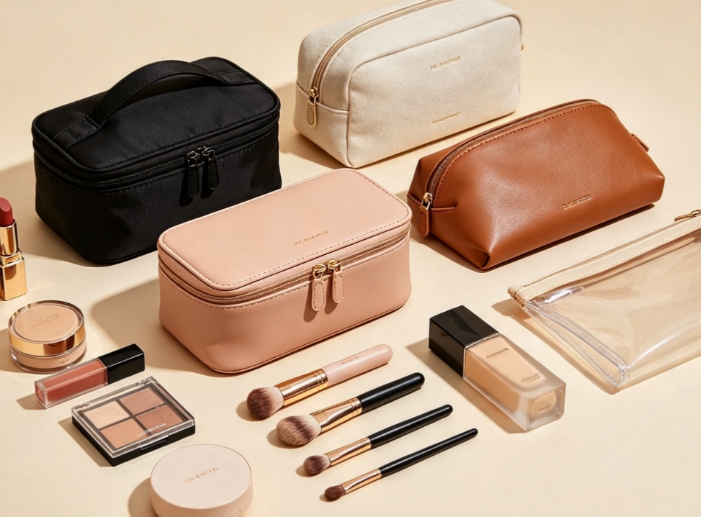
A cosmetic bag often has to protect, organize, clean easily, and carry a clear visual identity at the same time. Mixed materials can help, but only when each fabric has a practical role in the finished OEM program.
One Material Rarely Solves Every Job
A cosmetic bag often needs to look clean, protect small products, open smoothly, print well, and survive repeated handling, which is a lot to ask from one fabric.
The canvas makeup bag material planning works best when buyers decide which part of the bag needs softness, which part needs shape, and which panel must carry the clearest logo.
The outer shell carries first impressions
Canvas, nylon, PU, TPU, and transparent plastic each create a different first impression before the user touches the zipper.
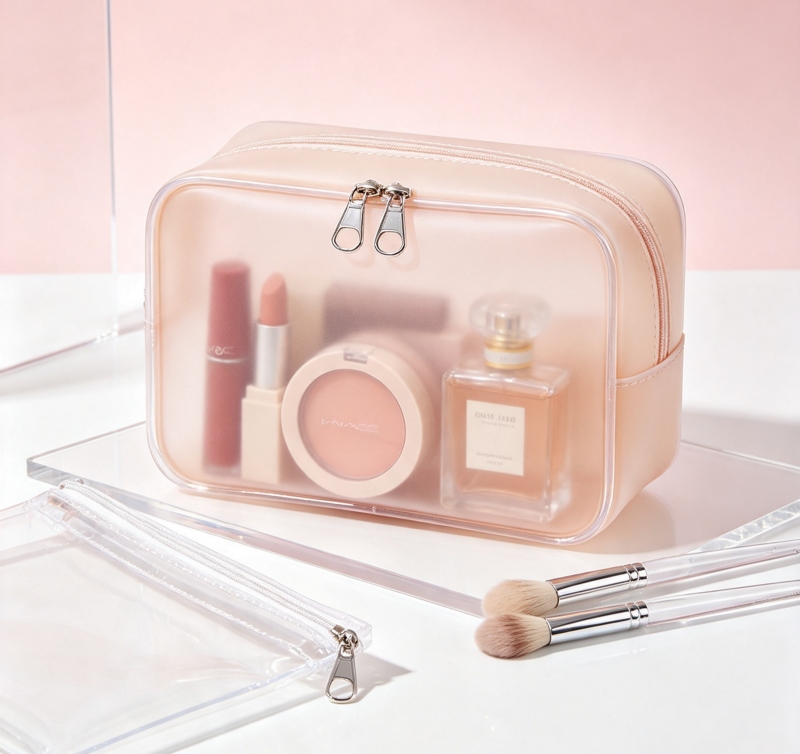
Canvas can support a natural texture and strong screen printing, while clear TPU or PVC-style panels can help users see contents without opening the bag.
The lining controls the working experience
The inner material decides whether brushes slide smoothly, powders are easier to wipe away, and small bottles stay separated from soft tools.
This is where material mixing becomes a business decision as well as a design choice. A buyer can reserve the more costly or more distinctive material for the area that customers notice first, while using a practical lining where daily handling matters most.
| Material area | Common role | Buyer question |
| Canvas or woven shell | Texture, print surface, soft structure | Will the logo stay readable on the chosen weave? |
| Transparent panel | Visibility and quick checking | Does the clear panel need privacy, tint, or reinforcement? |
| Mesh section | Ventilation and item separation | Will small items snag or remain visible enough? |
| Nylon or polyester lining | Smooth interior and practical cleaning | Does the lining preserve enough usable capacity? |
Material Pairing Should Follow the Use Case
A mixed-material design should solve a clear use case rather than display every available fabric.
The mesh pouch visibility zones make sense when the buyer wants fast checking of brushes, samples, or small tools, but mesh should not be placed where powders, liquids, or sharp caps may snag.
Camytonc offers custom makeup bag material options including nylon, leather, waterproof materials, clear-window ideas, lining choices, zipper pulls, logo methods, and multi-layer or expandable structures.
Logo methods must match the surface
A logo method that looks sharp on smooth nylon may lose precision on a coarse weave, while metallic or transparent panels can change how color, shine, and shadow appear around the mark.
Buyers should approve the logo on the actual material combination, because a digital mockup cannot show how stitching, heat, texture, or panel curvature will affect the final result.
Protection and visibility can work together
A transparent window can reduce searching time, while a solid fabric base can protect the bag from scuffing and keep the overall shape stable.
A soft outer textile can warm up the appearance, while a wipeable inside lining keeps the product practical for cosmetics that may leave residue.
- Use clear panels where quick identification matters.
- Use tougher textiles where the bag rubs against surfaces.
- Use smooth lining where powders and creams may touch the inside.
- Use branded hardware only where it will not disturb opening or balance.
Sampling Reveals Where Materials Disagree
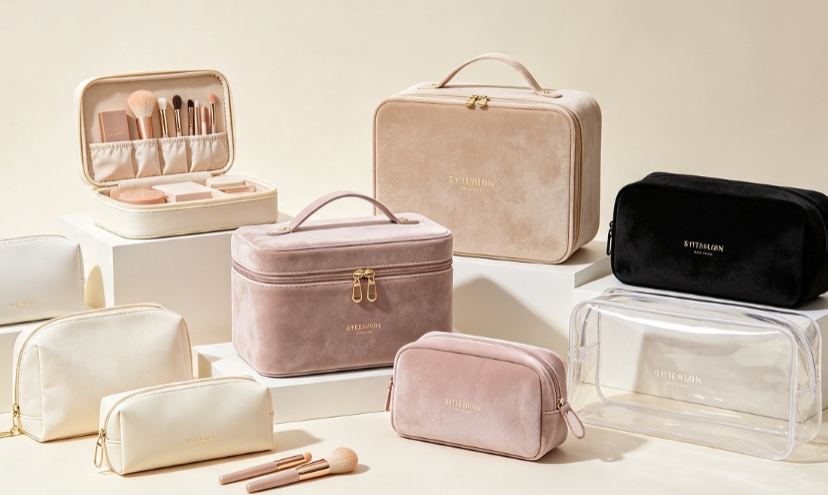
Materials that look compatible on a specification sheet may behave differently when stitched, folded, heat-pressed, or zipped around corners.
The nylon makeup bag OEM construction should test seam puckering, zipper tape stiffness, logo adhesion, color matching, and whether the mixed materials age visually at the same pace.
Sampling is also the right stage to confirm whether a high-gloss panel makes nearby fabric look dull, or whether a textured fabric makes a clean logo appear less precise.
The sample should be handled like a finished product, not only photographed from the front. Open the zipper, press the corners, fold the body slightly, and check whether each material returns to shape in a compatible way.
If one material stretches and another resists movement, the seam between them may become the first place where the design looks tired after repeated use.
Mixed-material bags also need a cleaning check. A wipeable clear panel, a textile binding, and a fabric puller can each react differently to powder residue, hand cream, or light moisture.
When buyers define those care expectations early, the material plan becomes easier for the production team to repeat and easier for the user to understand during normal daily product handling.
The final material mix should also respect the bag shape. A flat pouch can accept wider printed panels, while a rounded or expanding body may need softer transitions so the materials do not fight the silhouette or distort the finished profile.
A Balanced Material Decision
Mixed-material cosmetic bags work best when each material has a defined task: one for appearance, one for protection, one for visibility, and one for comfortable use.
Wholesale buyers should keep the material story simple enough for production teams to repeat and specific enough for end users to understand without instructions.
For a mixed-material cosmetic bag program, share the target use, preferred fabric hand feel, logo method, and cleaning expectations when you contact us.
FAQ
Why mix materials in a cosmetic bag?
Material mixing helps one bag combine appearance, structure, visibility, and easier cleaning when one fabric cannot do all of those jobs well.
Is mesh suitable for every makeup pouch?
Mesh is useful for visibility and ventilation, but it should be avoided where powders, liquids, or tiny caps could snag or show too much content.
Can canvas work with transparent panels?
Canvas can pair with transparent panels when seam reinforcement, panel stiffness, and logo placement are tested in sampling.
What should buyers check before bulk production?
Buyers should check seam behavior, color matching, logo method, lining capacity, zipper movement, and how the materials look together under normal light.
Does mixed material always increase cost?
Mixed material can add sourcing and sewing complexity, so it should be used only when the added function or appearance supports the program value.