
Beach Bag Materials Under Sand Moisture and Load
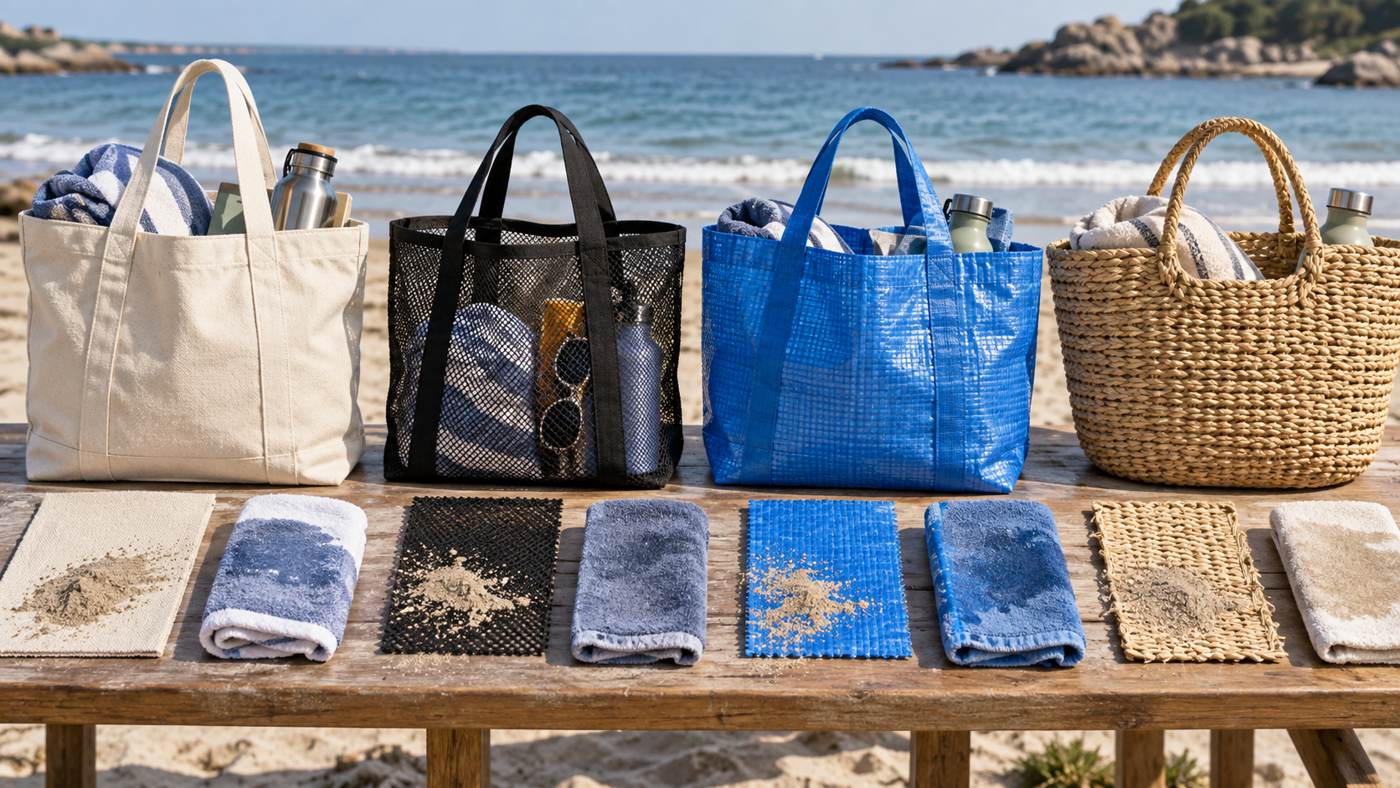
Beach bag materials reveal their real differences when sand, damp contents, and a heavy load arrive together. Wholesale buyers can avoid mismatched specifications by comparing how canvas, mesh, woven polypropylene, and straw behave in the same practical conditions.
Beach Conditions Expose Material Tradeoffs
A beach bag faces three practical stresses at once: fine sand works into surfaces, damp contents transfer moisture, and bulky loads pull on the handles and base. Material choice changes how the bag releases sand, dries, keeps its shape, and carries weight. Wholesale buyers need to define which of those behaviours matters most for the intended program.
No single material wins every test. Open mesh releases sand quickly but exposes contents. Dense canvas supports print and structure but can hold moisture and grit. Woven polypropylene resists dampness and suits efficient production, while straw offers a distinctive hand-made appearance with different care and consistency needs.
Four Material Behaviours at a Glance
A comparison should consider the whole construction rather than the fibre name alone. Camytonc’s custom beach bag material options include woven, canvas, straw, and functional structures that can be matched to different bulk requirements. Coatings, lining, binding, handle reinforcement, and bottom panels can change the result significantly.
Because fabric weight, weave density, finish, and construction vary between projects. Buyers should test the nominated material with sand, a damp textile, and the planned carried weight.
Canvas Balances Structure and Decoration
Canvas creates a familiar, substantial tote with broad surfaces for printing or labels. Its dense weave gives a OEM bag manufacturing resources more body than open mesh, yet the same weave can retain fine sand and absorb moisture unless a finish or lining changes that behaviour.
A canvas sample should be checked after damp exposure and drying. Buyers should look for shrinkage, colour transfer, stiffness changes, odour retention, and distortion around the handles. A reinforced base can help with heavier loads, but extra layers also slow drying and may trap sand between seams.
Points to Confirm in the Sample
- Rank sand release against privacy and containment.
- Test a damp towel inside the finished bag.
- Carry the planned maximum load through several cycles.
- Inspect handle anchors, base, binding, and lining.
- Agree on cleaning guidance and acceptable variation.
The comparison should cover each straw beach bag, cloth beach bag, and fabric beach bag as a finished construction rather than judging only an isolated swatch.
Mesh Releases Sand but Needs Edge Control
Mesh works well when quick drainage and sand release are primary goals. The open structure allows air movement and makes contents visible, which can simplify sorting. The tradeoff is reduced privacy, less protection for small items, and concentrated stress where the mesh joins binding or solid panels.
The edge construction often determines durability. Binding width, stitch density, reinforcement patches, and pocket placement should prevent tearing without making the bag rigid. A mixed-material design can use mesh in drainage zones and a solid base where abrasion and small-item containment matter more.
Woven Polypropylene Handles Moisture Efficiently
Woven polypropylene offers low weight, tear resistance, moisture resistance, and strong print potential for large programs. Its performance depends on weave density, lamination, seam treatment, and handle attachment. A laminated surface is easy to wipe, while an unlaminated weave may release water differently and feel less structured.
Buyers should check fold memory and edge finish because repeated packing can create visible creases or fraying. The material also sounds and feels different from canvas or straw, so the program’s positioning and expected reuse pattern should be clear before sampling.
Evidence to Record at Approval
The approval record should identify the sample version, critical measurements, named materials and components, functional checks, and any accepted variation. These details keep later production decisions tied to the item that the buyer actually reviewed.
Straw and Wicker Need Controlled Expectations
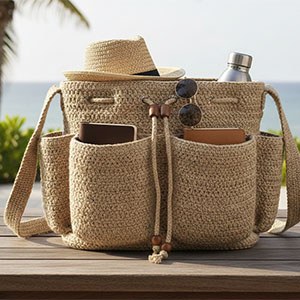
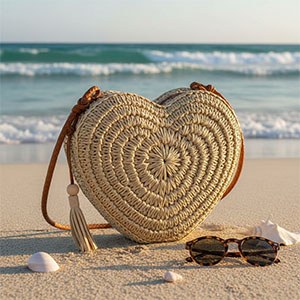
A straw beach bag provides texture and a seasonal visual identity, but natural or handcrafted components may vary in colour, thickness, and weave. Sand can lodge in the surface, moisture can affect shape, and sharp bends may damage fibres. These are material behaviours that should be addressed in the approved standard.
A stable lining can protect contents and support the body, while a reinforced handle connection can spread load across the woven structure. Buyers should agree on acceptable natural variation and inspect how the bag recovers after packing, transport, and controlled damp exposure.
| Material | Sand and moisture behaviour | Load and care priority |
| Tela | Can retain grit and absorb dampness | Dry fully; reinforce base and handles |
| Mesh | Releases sand and drains quickly | Protect edges and small contents |
| Woven polypropylene | Resists dampness and wipes clean | Check folds, seams, and handle anchors |
| Straw or wicker | Textured surface can trap sand | Control moisture and natural variation |
Construction Can Change Material Performance
Material selection sets the baseline, but construction decides how the finished bag carries a real load. The custom bag production portfolio can help connect reinforcement, linings, closures, and logo methods to the nominated base material. A heavy towel-and-bottle load needs different handle anchors from a light promotional kit.
Testing should reproduce the use pattern: add sand to the exterior, place a damp towel inside, load the bag to the planned weight, carry it, empty it, clean it, and let it dry. Review the base, seams, handles, colour, odour, and retained grit after the cycle.
Bulk Programs Need a Defined Care Story
A clear material choice includes a realistic care instruction. Buyers reviewing a broader
should select a bag whose cleaning and drying needs fit the program, because care expectations affect repeat use and perceived quality.
The practical takeaway is to rank sand release, moisture response, load support, decoration, and appearance before choosing the material. Then approve the finished construction through a simple environmental and load test rather than relying on a swatch alone.
Packing and Storage Affect the Delivered Shape
Beach bag materials react differently to compression during shipping and storage. Canvas may crease, woven polypropylene may hold fold lines, straw can break at sharp bends, and mesh can distort if heavy items press against it. The packing method should protect the qualities that justified the material choice.
A packing trial should compare the bag before and after carton compression, a reasonable storage period, and recovery at room conditions. Buyers can then specify folding, stuffing, separators, or carton orientation where these controls materially improve the delivered shape without creating unnecessary packaging.
If you are preparing a wholesale brief for this product, contact Camytonc with the intended load, material, dimensions, artwork, and use conditions so the sampling discussion can begin with a clear production target.
Perguntas frequentes
Which beach bag material releases sand most easily?
Open mesh usually releases loose sand more readily than dense canvas or straw. The finished design still matters because solid bases, pockets, binding, and linings can retain grit.
Is canvas suitable for damp beach use?
Canvas can work when its weight, finish, lining, drying method, and construction fit the program. A sample should be exposed to damp contents and checked for colour change, shrinkage, odour, and drying time.
What makes a straw beach bag suitable for bulk orders?
A clear material standard, acceptable natural variation, stable lining, reinforced handles, and protective packing improve consistency. Buyers should approve representative texture and colour ranges rather than expect identical fibres.
How should handle strength be evaluated?
Load the finished bag to the planned maximum weight and repeat lifting and carrying cycles. Inspect the webbing or handles, stitch points, body fabric, and base for distortion or seam movement.
Can different materials be combined in one beach bag?
Yes. Mesh drainage panels, a solid base, a lined straw body, or reinforced canvas zones can solve specific problems. Each added junction needs a repeatable seam and should be tested under moisture and load.