
Leakproof Waterproof Thermal Bags for Outdoor Programs
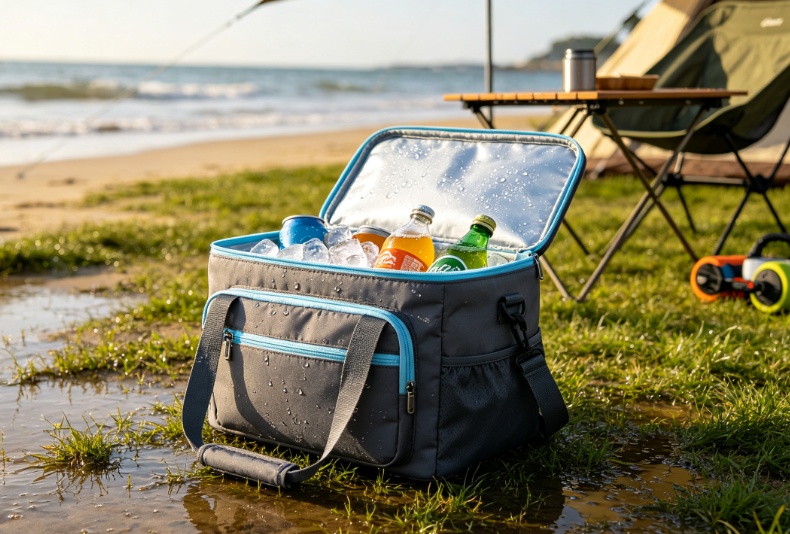
Outdoor cooler programs often place soft thermal bags on damp grass, sandy beaches, boat decks, sports fields, and busy event spaces. A reliable bag needs to slow down heat transfer. It must also keep melted ice or condensation well managed. Furthermore, the bag should stay easy to carry after repeated use. For wholesale buyers, leakproof and waterproof features are not just decoration. Instead, they serve as vital risk controls built directly into the structure.
What Leakproof and Waterproof Really Mean
Leakproof performance usually refers to how well the interior manages liquid inside the bag. Waterproof performance usually refers to how well the outside and seams resist water from the environment. A thermal bag may need both, but the construction details are different.
Camytonc creates custom cooler bag programs offering waterproof construction options, dry-wet separation, and specific insulation layouts. They also provide various branding choices and full OEM/ODM support. This makes the design discussion much more precise. Buyers can clearly define if the bag must handle light condensation, wet towels, loose ice, cold beverages, or outdoor splashes.
Interior leakage risk
Interior leakage risk comes from melted ice, condensation, bottle spills, and cleaning water. Linings, welded or sealed seams, drain-friendly shapes, and corner construction all affect whether liquid stays controlled during normal carrying.
Exterior water exposure
Exterior water exposure comes from rain, boat spray, pool areas, damp ground, or beach use. Polyester, nylon, PVC, TPU, PEVA, and coated fabrics can all play a role, but the final result depends on material grade, seams, zipper design, and workmanship.
Material Choices That Support Outdoor Use
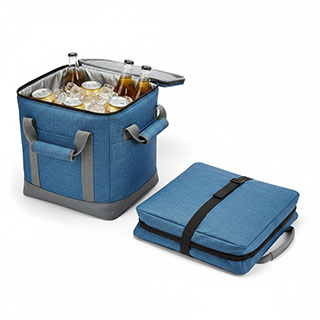
Outdoor use rewards materials that balance abrasion resistance, cleaning, water resistance, and weight. Polyester and nylon are common outer choices because they are durable, color-stable, and easy to maintain, while coated or laminated layers can improve wet-area performance.
| Composant | Common option | What buyers should verify |
| Outer shell | Polyester, nylon, coated fabric | Abrasion resistance, water resistance, color stability |
| Interior lining | PEVA, TPU, PVC, aluminum film | Wipe-clean surface, seam sealing, odor control |
| Insulation layer | Foam or multi-layer insulation | Thickness, flexibility, recovery after folding |
| Opening system | Zipper, roll-top, flap cover | Splash control, ease of loading, stress points |
| Carry system | Handles, shoulder strap, backpack straps | Loaded comfort, stitching strength, balance |
UN custom leakproof thermal tote build should match the liquid risk, the outdoor setting, and the expected carrying load. A picnic tote, a beach cooler, and a sports event bag may all need insulation, but they do not need the same opening, lining, or handle design.
Construction Details Buyers Should Confirm
Construction details decide whether a good material becomes a reliable bag. Buyers should look closely at inner corners, zipper ends, bottom panels, strap attachment points, and the transition between soft fabric and structured insulation.
Check whether inner seams are stitched, taped, welded, or otherwise sealed for the intended liquid load.
Confirm whether the bottom panel resists abrasion when the bag sits on rough outdoor surfaces.
Review zipper protection because water often enters through openings before it enters through fabric.
Test handles and shoulder straps with realistic packed weight, not an empty sample.
Pour un waterproof thermal bag custom project, the buyer should give the factory a practical use case instead of only asking for a waterproof label. A clear use case helps the factory recommend the right fabric, lining, and structural reinforcement.
Performance Tests Before Wholesale Approval
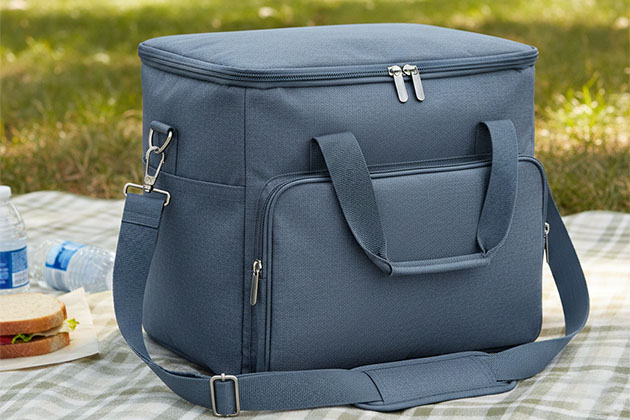
Sample testing should simulate the way the bag will be handled by the final user. A good visual sample can still fail if water pools in weak corners, the zipper jams when the bag is full, or the shoulder strap twists under load.
Liquid and cleaning checks
Liquid checks should use controlled amounts of water inside the bag, followed by normal carrying, tilting, and standing. Cleaning checks should confirm that the lining wipes down smoothly and that corners do not trap residue after repeated use.
Outdoor handling checks
Outdoor handling checks should include packed weight, rough-surface placement, strap pull, zipper cycling, folding, and short exposure to damp conditions. These tests help buyers judge whether the sample is ready for a branded program.
Working with a waterproof cooler bag manufacturer also gives buyers a clearer path for sample feedback. Factory teams can adjust lining, seam treatment, insulation thickness, and carry systems before the final order is locked.
Branding Without Weakening Performance
Brand decoration should not damage waterproof or leak-control areas. Large printed panels, sewn patches, woven labels, zipper pulls, and color blocking can all support a promotional program, but every decoration method should be checked against fabric coating, seam sealing, and cleaning needs.
The safest branding plan places logos where they stay visible without creating new stress points. For higher-use outdoor programs, buyers should ask for a branded sample and inspect whether decoration changes the hand feel, flexibility, or water resistance of the selected material.
Summary for Outdoor Cooler Bag Buyers
A leakproof waterproof thermal bag should be specified around real outdoor exposure, not a generic product label. Buyers should define the liquid risk, select the right lining and shell, verify seam and zipper construction, and test the loaded sample before approving a wholesale run.
Camytonc can support custom cooler bag programs with material options, waterproof construction details, insulation layouts, branding, sampling, and bulk production. For a new outdoor or promotional cooler project, share the use case, size target, load expectation, and logo plan when you Contactez-nous.
FAQ
Is a waterproof thermal bag always leakproof inside?
No. Waterproof outer fabric helps resist outside moisture, while leakproof interior performance depends on lining, seams, corners, and opening construction.
Which lining is useful for a leak-control cooler bag?
PEVA, TPU, PVC, and aluminum-film linings can support wipe-clean use, but buyers should confirm seam treatment and sample performance.
What should buyers test in a cooler bag sample?
Buyers should test liquid control, zipper cycling, packed weight, strap strength, corner cleaning, folding recovery, and surface abrasion.
Can branding reduce waterproof performance?
Branding can affect performance if decoration pierces coated areas or adds stress to seams, so logo methods should be checked on the sample.
What information helps a factory quote accurately?
A useful brief includes size, capacity, outer material, lining, insulation expectation, carry method, color, logo method, sample standard, and order quantity.